People are complicated. People, even those we know well, can behave in unpredictable and even contradictory ways. I’m always fascinated by the reports of how thoroughly numerous serial killers are able to fool close friends and neighbors. For example, serial killer Dennis Rader murdered at least ten people in Wichita, Kansas, between 1974 and 1991. His family and the church he led were flabbergasted at his arrest. They had no clue.
This is confusing. As humans, we like to identify patterns and predict future events based on those patterns. When our predictions are wrong, it creates uncomfortable cognitive dissonance. We don’t want to believe that our nice neighbor is a serial killer. Nor do we want to imagine that our office nemesis, who is always so dang rude, might go home to their family and be a model parent and spouse. Surely, if someone is rotten, then they must be rotten all the way through—or if they are nice, then obviously, they must be nice all the way through.
But they aren’t. Rotten people sometimes do nice things, and nice people sometimes do rotten things.
This is where Poopket Theory comes in.
Imagine, if you will, that a person’s personality is some kind of weird meatball. It’s made of a bunch of different stuff that is mashed together in the bowl. Some of the stuff is yummy. Some of it is gross. The stuff gets mixed and then formed into a very non-homogeneous meatball. There are chunks and striations and pockets of stuff throughout. Because yummy stuff wasn’t the only stuff in the mixing bowl, even if the meatball is mostly yummy, there will inevitably be pockets of gross inside the meatball.
Even the best meatball is going to have shit poop pockets in it. It’s an unavoidable fact of life.
And when you interact with someone, it’s like slicing open the meatball. However, the nature of the slice you get depends on a lot of variables: who you are, the circumstances of your meeting, if they or you are having a bad day, and so on. There’s always going to be a certain element of randomness to what cross-section of the meatball you get. If it’s a mostly good meatball, there’s a low probability that your slice will include a poop pocket. If it’s a mostly poop meatball, then you have a high likelihood of getting a poop pocket. But, like the shocked neighbor of a serial killer, you have a chance, even if a small one, of getting a non-poopy slice of even the poopiest meatball.
This explains otherwise confusing inconsistencies in people’s behavior. It explains why someone who has always been kind to you was a jerk to your friend, or why your boorish office nemesis turns out to be an angel to their spouse. It’s frustrating because we want people to be consistent. We want their behavior in all circumstances to conform to our understanding of them. But they simply don’t.
I had a formative experience in graduate school that ultimately led me to develop Poopket Theory. As a PhD student, I was expected to pass a qualifying exam. I had two chances to do this. If I failed twice, I would be removed from the program. A lot was riding on my success—if I failed, it would be the end of the career I had planned for myself. Forced life plan reboot. Epic bummer.
And I failed on my first attempt.
It was crushing.
Determined to survive round two, I renewed my study efforts. I reviewed my failed exam and noted that I had a weak point stemming from one particular class. And two different professors taught that class, alternating semesters. Most of the questions I failed were written by the professor who didn’t teach my semester.

I looked up his office hours and went to see him.
Now, since the professor wasn’t my advisor and I had never been his student, he didn’t owe me anything. When I arrived at his office door clutching a copy of my failed exam, he would have been well within his rights to tell me to poop off. Instead, he very gamely invited me to sit down. That day, and in the weeks to follow, he generously gave me the time I needed to fill in the gaps of my knowledge. He was always welcoming and patient. Thanks to him, the other faculty who fielded my questions (most not as patiently), a rigorous study schedule, and the support of my fellow students, I passed my second qualifying exam and went on to complete my PhD.
One of my classmates was not so lucky.
She joined our program a year after I did, and like me, she failed her first attempt at the qualifying exam. But her advisor didn’t even give her a chance to take it a second time; he just kicked her out of his research group. She never got her PhD. Forced life plan reboot.
The kicker?
Same professor.
The man who patiently helped me pass my second qualifying exam didn’t allow my classmate a second chance before cutting her loose.

What the heck, right? How could this be the same person?
Poopket Theory tells us that for whatever reason—maybe she reminded him of his estranged sister, maybe a year later he was going through a messy life change, maybe she had unintentionally insulted his favorite sports team—my classmate got a slice with a poop pocket, and I didn’t.
That’s a hard reality to sit with. I don’t want to think anything ill of someone who was incredibly kind and generous to me. But I know and trust my classmate, and I had to acknowledge that her experience was real and true. I was forced to embrace the cognitive dissonance of it all, and ultimately, this experience is what gave birth to Poopket Theory.
I share this story and my theory because I think it’s important to understand that people are not uniform. They are messy and complicated and contradictory. As Walt Whitman said in his iconic poem, “Song of Myself,”
Do I contradict myself?
Very well then I contradict myself,
(I am large, I contain multitudes.)
Understanding ourselves and those around us means acknowledging this contradictory element of human nature. We all have poop pockets in our personality meatballs, and we will all, even the best of us, at one point or another, behave poopy towards someone.
And knowing this has applications in the workplace.
As humans, we tend to rely on our own experiences more heavily than we do on things we are simply told by others. That makes sense. If we witnessed it with our own eyes, it’s more believable than hearing about it second-hand. People lie, or exaggerate, or misunderstand. This stronger reliance on our own experience, combined with our desire to believe that people are consistent (all the way good or all the way bad), can lead to problems.
For example, let’s imagine that your coworker Rey is homophobic. She says rude things to your coworker, Meera, who is an out lesbian. One day, Meera complains about this to you.
Let’s consider two possible cases for your response.
If you are straight, Rey has probably never made rude comments about your sexual orientation, and Meera’s complaints are a surprise to you. “Are you sure?” you ask her. “Maybe it was just a misunderstanding.” Now, that’s not an unreasonable response, but also consider how Meera might feel about it. After being insulted repeatedly enough to confide in a trusted colleague, to not be believed would be pretty frustrating.
On the other hand, if you are also openly queer, and you have first-hand experience of Rey’s insulting comments—because she’s done it to you, too—then your response is likely to be “Oh, I know! You, too? Ugh.” That’s a much more supportive and validating response for Meera.
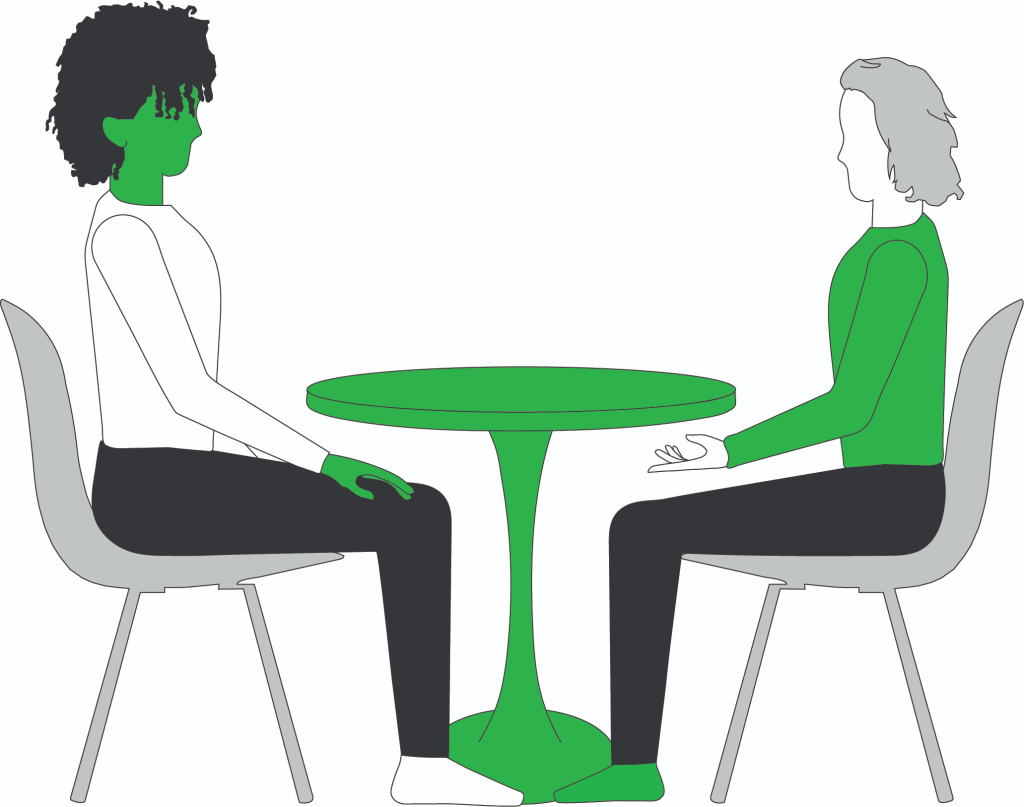
The trick is to be able to hold two contradictory behaviors in your mind and believe that it is possible that they came from the same person, whether it’s a good thing about someone you dislike or a bad thing about someone you like. It’s hard to accept such inconsistencies in others, and, ultimately, in ourselves. Not that we should believe second-hand stories (whether they be negative or positive) without examining them, but that we shouldn’t reflexively dismiss them out of hand just because we have a conflicting impression.
Embracing Poopket Theory is uncomfortable. It requires us to sit with cognitive dissonance. But if we can allow ourselves to do that, it can be a valuable tool for examining and understanding all the messy and interesting human behavior going on around (and within) us. We all make mistakes. We all have personality meatball poop pockets. Being honest with ourselves about that enables us to adapt, grow, and improve. Seeing others with clear eyes (through the lens of Poopket Theory? gross…) allows us to better understand and empathize with others. That, in turn, allows us to form more meaningful, or at least lower-friction, professional relationships.
First published in the Virtuous Cycles Newsletter on 8.15.2025
By Christina C. C. Willis
 Sustainable Networking